left until the campaign ends
Any day could be their last
Our job is to give them one more day
“A tractor came toward us with its bucket full. Hands, legs, body parts, whole bodies. Then it just spilled out onto us, and we started collecting.”
That is one of dozens of accounts like it from October 7th.
IDF soldiers, men and women, who were on the front line and saw the worst there is, far beyond what a twenty-year-old's mind can hold.
They came home. For them, every day since October 7th has been a war.
Fits of rage in the middle of dinner. A thirty-year-old man who wakes up in wet sheets and washes them himself before anyone gets up. A shame he can't explain to a six-year-old, let alone to the woman sleeping next to him.
They protected our children and our homes. Now it's our turn to take care of them. It's the least they deserve.
For three years they were on the battlefield for us. $180 is the least we can do for them.
Our organization relies on volunteers
100% of the money goes to treatment
Email receipt · Registered Israeli nonprofit No. 580776292
Our organization relies on volunteers
100% of the money goes to treatment
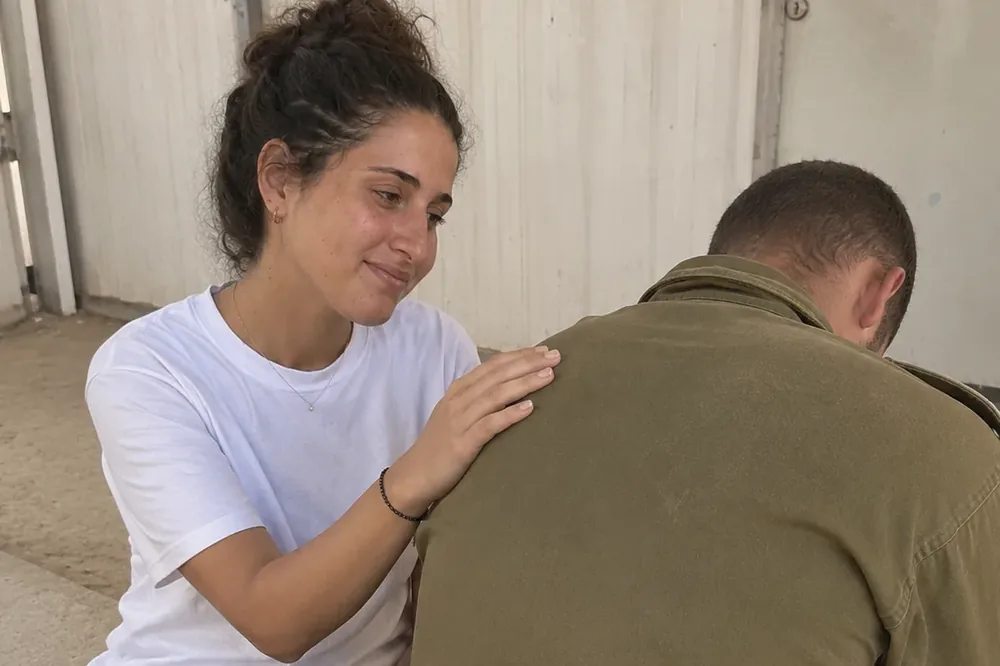
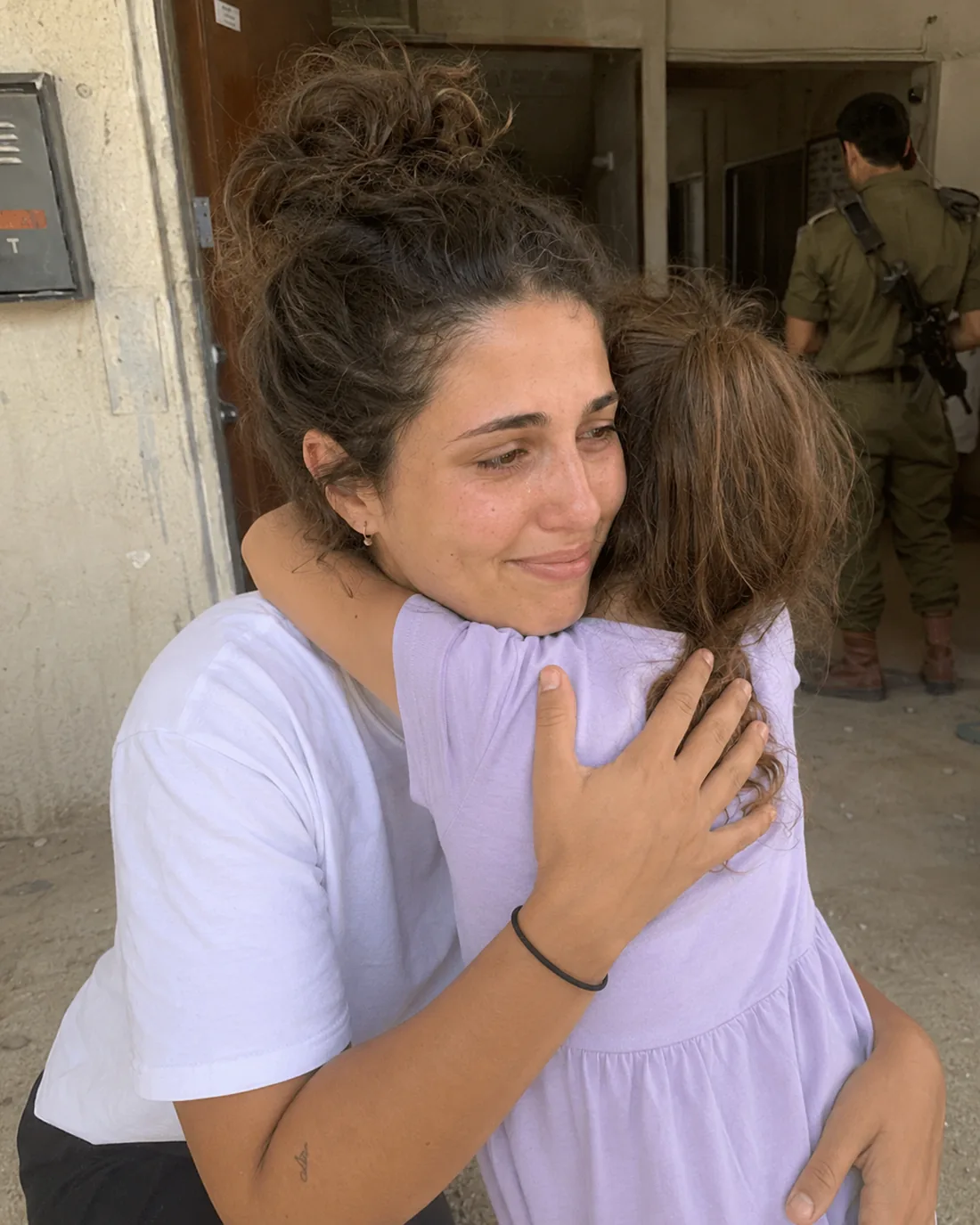
They came home.
But some of them are still on the battlefield.
On the outside he looks fine. He gets up in the morning, takes the kids to kindergarten, says “all good” when a relative asks. What happens inside shows only at home, and only to the people who live with him. A child drops a glass on the floor, and Dad lets out a scream he doesn't recognize as his own. A wife learns not to wake him with a touch, because he wakes up kicking. Sheets go into the machine at six in the morning before anyone is up, because the shame is bigger than the exhaustion. And on the nights he does fall asleep, he goes back to the same place, and no one in the family knows where he goes when he closes his eyes. He won't ask for help. The same resilience that held him together out there is what keeps him silent now, and sometimes he truly believes it will pass on its own. It doesn't. That's why we don't wait for them to come to us. We look for them, and we reach out first.
“You saved my life, my wife's and my kids'.”
I came after two years of being sure I just had to get used to it. That this is how things are now, and everyone around me would manage.
In the first session I barely spoke. By the third, I was telling things I'd never told anyone.
Last week my wife told me she recognizes me again.
Aharon A., 34, father of two
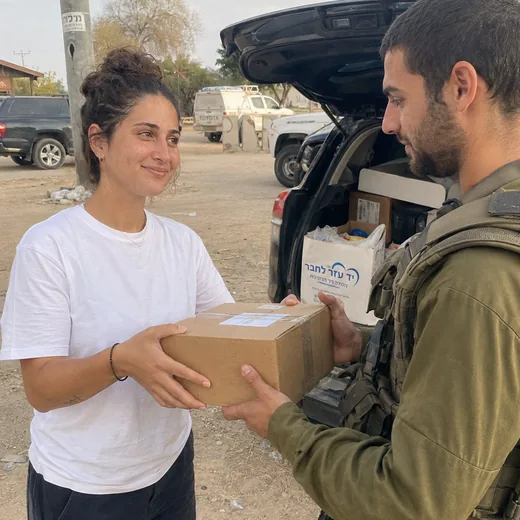
We don't promise he'll go back to being who he was before. We promise he won't go through this alone, and that he'll have one more day he can get through.
You can also give any amount you choose
$180
One soldier starts therapy
No waiting for a committee, and no need for him to prove how bad it is
What he saw there can't be erased.
What can happen is one thing: one soldier sits across from a professional and starts to talk. $180 is one session like that.
And the knowledge that someone out there didn't forget him the moment the war left the news.
We don't wait for him to reach out, because a soldier like that doesn't reach out. They come to us through a unit commander, a friend from the team, a wife who no longer knows what to do. We make contact, and we begin.
They're waiting for our help
How many will you help start therapy?
-

One soldier
One person who walks into the room, sits down, and for the first time since, says it out loud.
$180
-
Most popular

Two soldiers
Two people who until now carried it alone, each in his own home, sure they were the only ones.
$360
-

Three soldiers
Three homes where a child stops being afraid of the shouting, and a wife stops sleeping with one eye open.
$540
Amounts are in US dollars ($) · Email receipt
Four questions people really ask
and we answer them straight
Why doesn't the state take care of this?
Some of them are inside the system, and waiting. Some never applied, because someone used to being the one who holds everything together doesn't know how to ask. And between the waiting and the recognition, months go by in which he's at home alone with it. We don't replace what the state owes him. We step into the gap.
How do I know the money really gets there?
The project has its own donation link and its own budget, so not a single dollar can be moved to another project. The organization, Netina BeClick, is a registered Israeli nonprofit (No. 580776292) holding a certificate of proper management from the Israeli Registrar of Nonprofits. Its documents are open to anyone who asks to see them.
Why now? The war isn't in the news anymore
That's exactly why. While it was in the news, everyone was there. Now that the noise is over, he's home alone with what he saw, and this is exactly when it breaks out. Trauma doesn't follow the news cycle.
Does $180 really change anything?
One session doesn't heal, and we won't pretend otherwise. What it does is start. Someone who walks in once and finds out it's possible to talk about it usually keeps going, and that's the difference between someone getting treatment and someone left alone with it. Every $180 is one session like that.
Every therapy that opens is one more day he can get through


Who's behind this
An organization that relies on volunteers
“Otzma LaNefesh” operates within Netina BeClick, a registered Israeli nonprofit (No. 580776292), with the help of volunteers who give their time.
Each project has its own budget and its own donation link, so every dollar goes only to the cause you chose.
Thank you so much for your support! Just one final step before you're taken to the payment page.
- Step 1: amount
- Step 2: your details